About
For as long as I can remember, my favourite position has been on the sidelines, carefully watching the world around me. I enjoy the moment when apparent chaos begins to reveal connections, patterns and structure — especially when the answer is not obvious and different interpretations are still possible.
That interest led me to study psychology and applied mathematics. Psychology helped me understand how people perceive, choose and orient themselves in a complex world. Mathematics and statistics gave me tools to make parts of that complexity more explicit: through abstraction, empirical evidence, modelling and prediction.
I am especially interested in the ambiguous space between what we know, what we can measure and what we can reasonably infer. I value rigorous evidence, but I am also drawn to unusual, well-argued perspectives that challenge the established status quo without losing intellectual discipline.
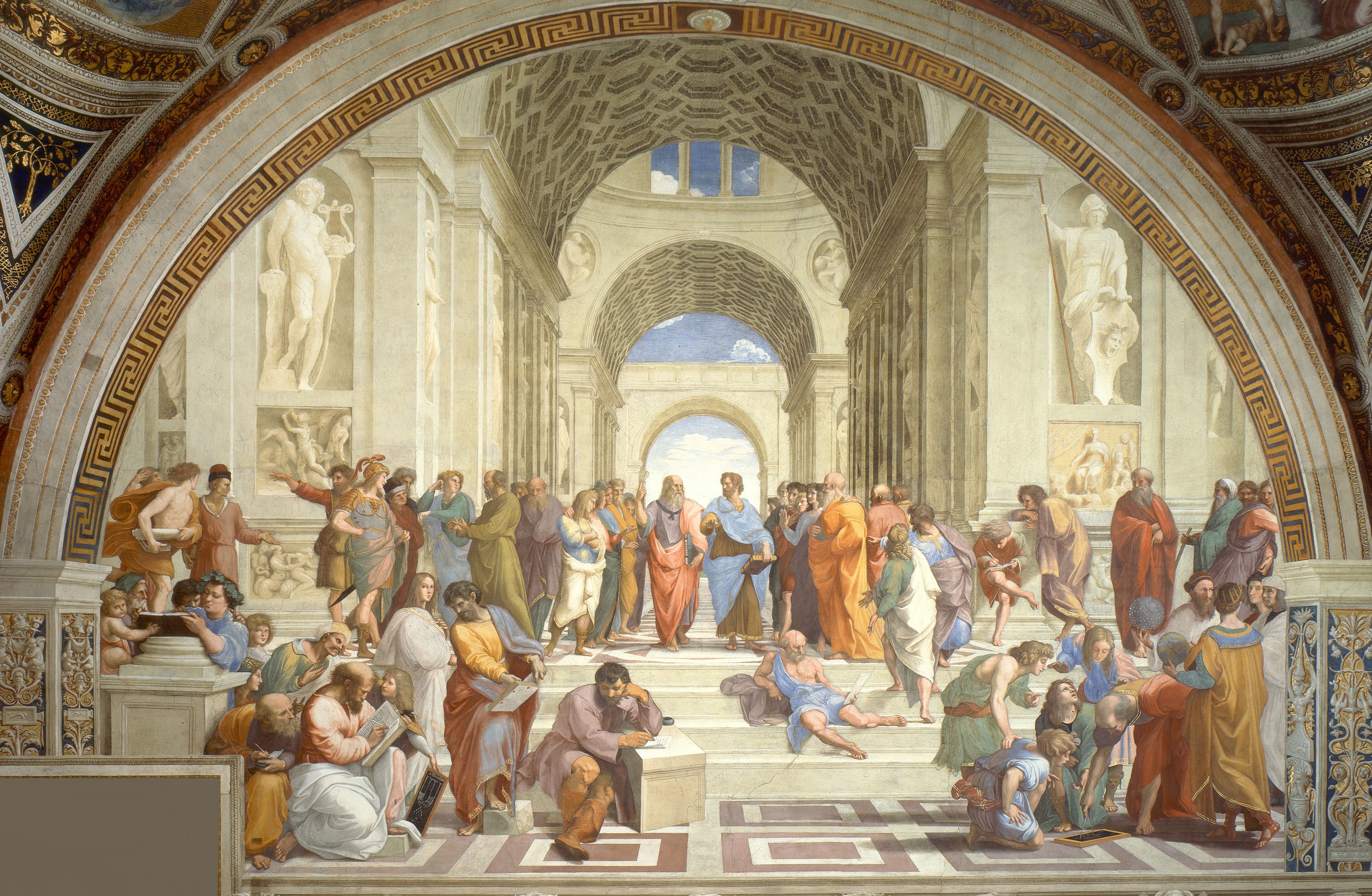
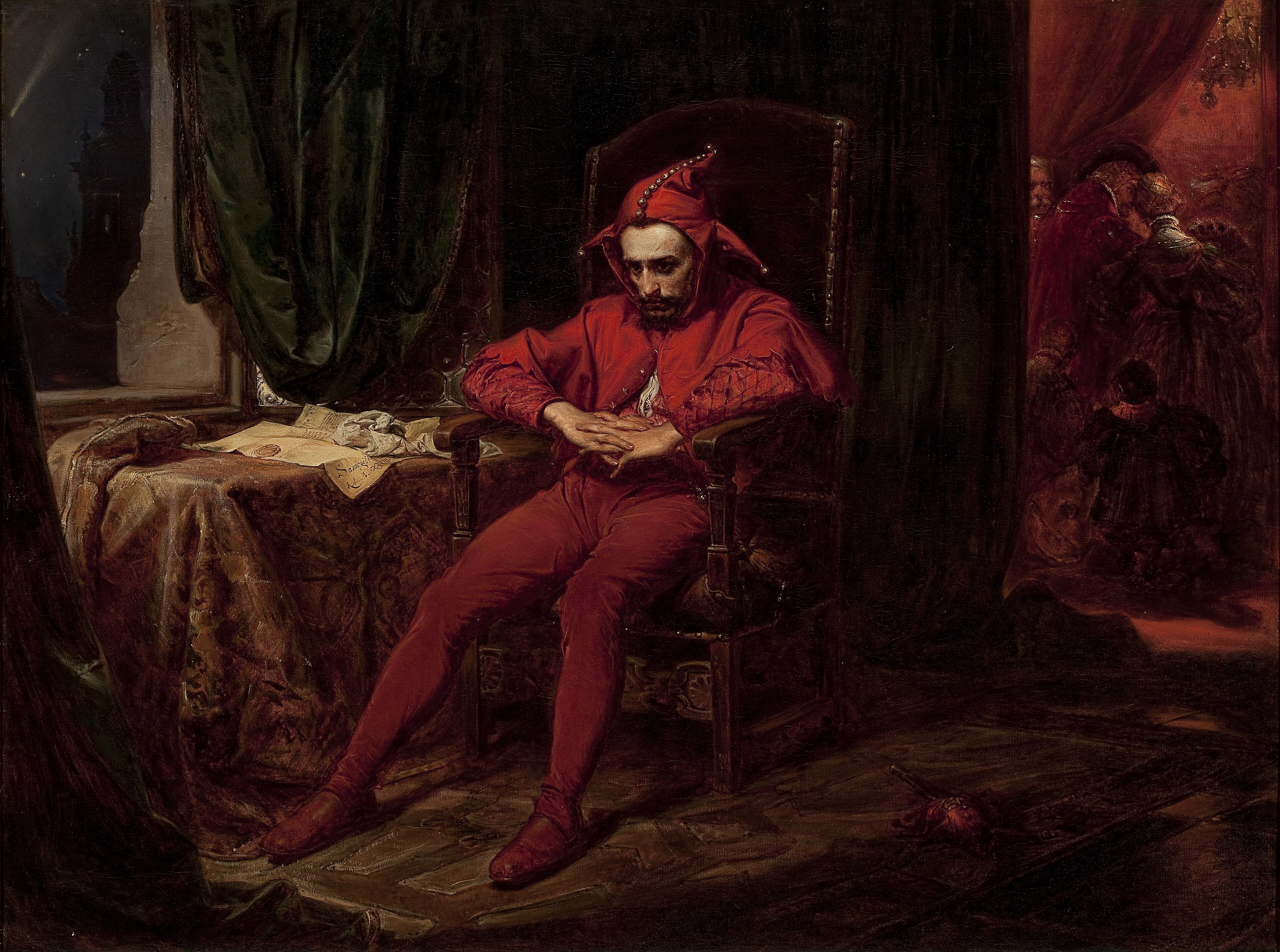
Two images in my office …
… that resonate with me in different ways.
The School of Athens resonates with the classical-humanist side of my education, especially my final school years in Latin, mathematics, history and economics. It reminds me of the great teachers I had, the joy I found in ideas, arguments, historical context and the many ways people have tried to understand the world — and of how much our own Western thinking still builds on those who came before us.
Stańczyk came to me much later. For me, it expresses the darker side of free and critical thinking: looking closely at what others prefer to overlook can create distance and isolation. It also reminds me that human beings do not only uncover facts; they also create shared meanings and realities that give groups orientation, belonging and coherence — and in social life, these can become just as powerful as what can be observed or measured. Understanding something does not always mean being able to change it, and part of clear thinking is learning to live with that tension.
Together, they mark two poles, both of which resonate deeply with me: the joy of exploring ideas critically and freely, and the possibility that what you uncover may leave you standing apart — like the jester who sees what the room would rather not notice.
Perhaps that is also why I have come to see much of my work as a form of bridge-building: between rigorous analysis and shared understanding, between complex methods and the people who need to act on them. The most sophisticated methods only matter when they help stakeholders orient themselves, develop a shared view of the situation and make better decisions. Good analytical work does not stop at seeing what others may have missed; it also helps bring the room along.
In my professional life, I help businesses understand how customers make purchase decisions — and use that understanding to improve brand positioning, offer portfolio and pricing. My day-to-day work combines customer insight, advanced analytics, simulation and, increasingly, AI-augmented workflows to turn complex data into clearer business decisions.
In my personal life, I strive to bring to my immediate environment a reliable sense of calm and balance, open-mindedness and a rational, honest way of looking at important questions. I also hope to help contribute to a climate in which we accept ambiguity and acknowledge the limits and inconsistencies of our own perspective before pointing fingers at others.
What connects these interests is a broader question: how can people and organizations make better decisions in a noisy world? For me, this includes ambiguity tolerance, rational thinking, evidence-informed judgement, and the ability to stay calm enough to see what is actually there.
This site collects small, concrete examples of that work and the interests behind it: analytical prototypes, data products, notes and experiments at the intersection of customer behaviour, decision intelligence and applied AI.
Professional focus areas
- Customer Insights
- Choice Modelling
- Market Segmentation
- Driver Analysis
- Ad hoc Advanced Analytics
- R-based data analysis
- AI-augmented workflows